

By Steven Hsieh
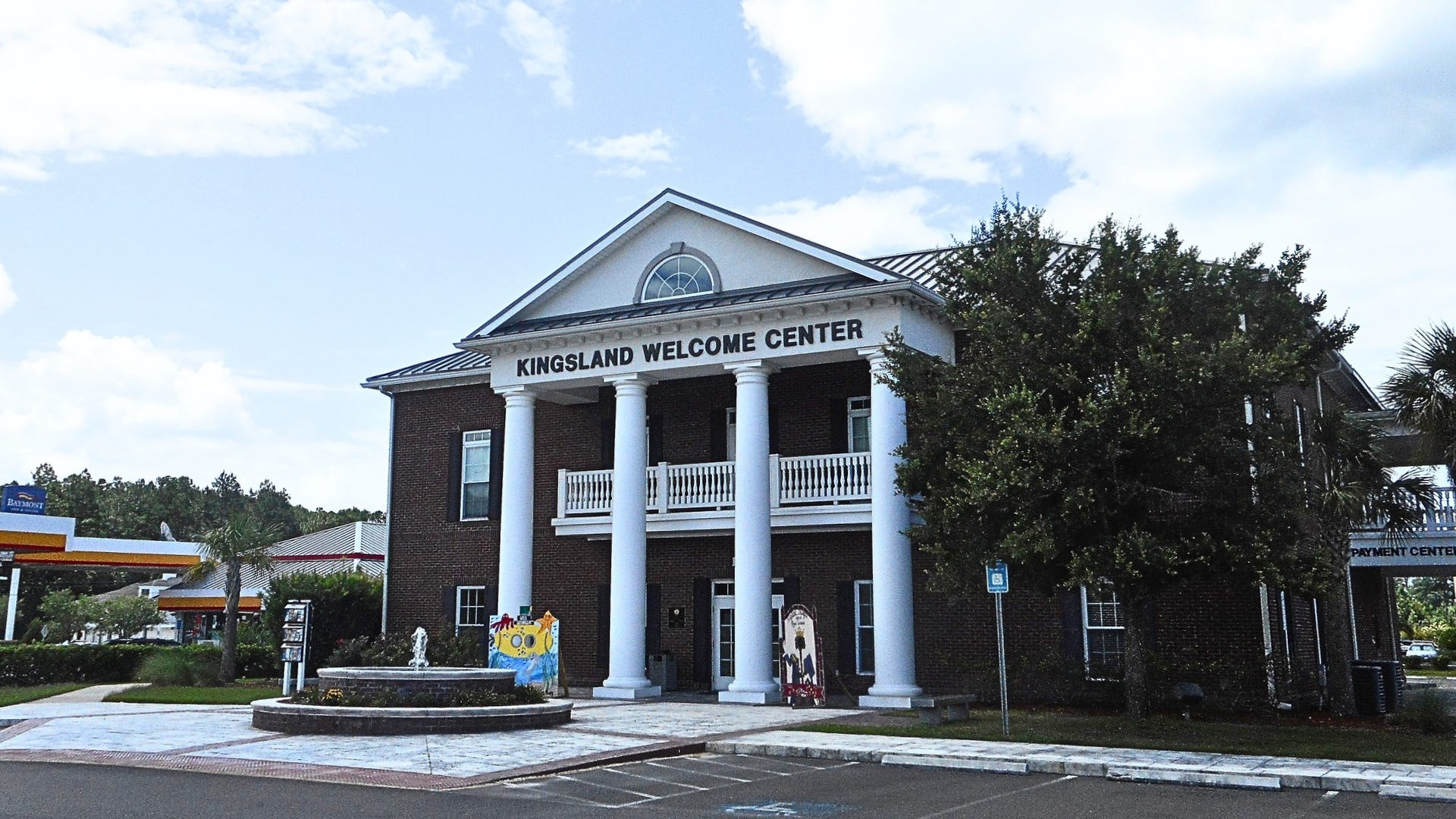
The city manager needed an ordinance. He’d “started hearing some chatter” about a potential data center in Kingsland, Georgia, the city of some 20,000 residents he’s managed since 2014. Kingsland lacked building standards for data centers, and Lee Spell wanted to get something on the books to address the energy, water and environmental concerns that have been fueling a backlash around the country.
Spell tracked down a copy of regulations that had been proposed in a different Georgia county, DeKalb, which includes about a tenth of Atlanta. Then he turned to ChatGPT.
“Rewrite this as a new ordinance for the City of Kingsland, Georgia,” Spell prompted the chatbot on December 23, 2025. A draft appeared in under a minute. Less than three months later, Kingsland’s city council voted 3-0 (one member was absent) to pass the data center ordinance. “I don’t know who put it together, but that’s really good work on that,” said one Kingsland council member before the vote. Spell officially submitted the ordinance, but the credit actually belonged to ChatGPT. The chatbot had written and edited most of the document: its standards for water and noise, preamble, generator testing rules and more.
The data center ordinance wasn’t the first law in Kingsland with AI as the primary author. Pick a random ordinance added to the Kingsland city code in the last couple of years. Odds are some, if not most, of its language traces back to ChatGPT.
AI and the law
Today’s large language models enable anyone with a decent internet connection to generate a competent-sounding law in less time than it takes to microwave popcorn. Lawmakers are naturally taking advantage. In 2023, the Brazilian city of Porto Alegre enacted one of the first known AI-generated ordinances. But few officials have voluntarily disclosed AI helping them write adopted laws. The handful of examples that become public knowledge are short on specifics.
In general, the rapid adoption of AI by governments already amounts to a massive, disorganized experiment taking place out of public view. More than 40% of public sector employees in the US used AI tools like ChatGPT or Claude for work in 2025, up from 28% in the second quarter of 2024. But those figures tell us very little about how our leaders and public servants are using AI. Who, if anyone, reviews a model’s output when it’s used to rank bids, summarize public comments or select bombing targets? For the most part, we don’t know. Standards for AI use in government exist in a patchwork of largely voluntary state guidelines, and in most cities, none at all.

Without a national framework, local governments are rushing to adopt AI without first establishing rules or training programs, according to Mila Gascó-Hernández, a professor at University at Albany, SUNY, who studies the use of AI by local governments. Smaller governments without the budgetary power of, say, New York or Chicago, feel pressure to keep up with peer cities adopting AI and capture promised efficiency gains.
“That’s when, of course, we may see a lot of risks happening,” Gascó-Hernández said. She is seeing public employees using AI output without “reading it, reviewing it, adapting it to their local context.”
The hazy balance between AI-assisted and AI-authored is especially consequential when we consider the likelihood that AI will write an increasing share of laws. But the status quo of secrecy means most people have almost no visibility when leaders use AI to write laws they use to permit, deny, fine, surveil or jail them.
This fall, seeking evidence of AI policymaking, I filed more than 150 public records requests to more than 120 local governments for transcripts of chatbot sessions involved in crafting laws. Some administrations refused, citing legal privileges. Many others are still searching. A handful sent me screenshots of a few chat sessions.
The outlier, Kingsland City Manager Lee Spell, delivered an export of his ChatGPT history from his free-tier OpenAI account, all 1,974 sessions covering a period from November 2023 to September 2026. (Free accounts limit the list of models available to users, and OpenAI usually reserves its most advanced reasoning models for paying customers.) The data provides an unprecedented window into one public official’s use of AI to help him run a city. It also offers a real world example showing mechanisms through which AI can gradually and subtly erode human judgment over critical governing decisions, a concern that rises as models become more capable.
“It’s not running the city”
Spell is a very busy man. His title, city manager, suggests someone who delegates. But Kingsland runs lean, and Spell often takes on duties that would otherwise go to an in-house lawyer, grant writer or communications officer (Spell handled all communications directly with me). ChatGPT, he told me in September, allowed him to hand off grunt work and “get out in the field and help manage these construction projects.”
The record shows that, for the first several months, Spell mostly used the chatbot for routine clerical work like revising emails. As his usage grew from a few sessions a week in 2024 to several chats nearly every weekday by spring 2025, Spell consulted ChatGPT on increasingly important judgments. The chatbot effectively set new rules for governing grandfathered zoning exemptions, public employee benefits, and even the city manager’s own powers. Around this time, Kingsland also began regularly enacting laws, resolutions and internal policies with substantive portions entirely shaped by AI.

“I would imagine it used to take hours if not days to really dig through all the research it takes to put a comprehensive ordinance together, whereas ChatGPT can lay the solid foundation in a matter of seconds, if not a minute or two,” Spell said.
He denied that ChatGPT replaced any human judgement in his administration. Every ordinance, he said, gets reviewed by him and coworkers. “I will read it and re-read it and research and verify,” Spell said during our Zoom call in September. He doubled down over the phone in October, after I presented evidence of entire adopted ordinances written by ChatGPT: “It may look that way, but every single ordinance does get human review. So it’s not running the city and we don’t rely solely on it. But if it gives us something that meets our needs and there’s no need to edit it, then we will use it.”
“yes”
Spell’s ChatGPT history contains timelines that raise a critical question: When AI plays a key role in government, what constitutes meaningful human review?
In Kingsland, ChatGPT generated policies and ordinances in sessions that lasted minutes, with minimal contributions from Spell. In November 2025, ChatGPT wrote Kingsland’s Title VI policy to comply with a federal anti-discrimination law from a single prompt: “Write a Title VI policy for the City of Kingsland.” It was posted in the city council’s agenda, unchanged except for contact details, before it was passed four days after. A Pregnant Workers Fairness Act policy written by ChatGPT with a similar prompt in April 2024 took about 15 seconds.
The October 2025 session that produced Kingsland’s water backflow ordinance, fee schedule and a guide for “City staff and water customers” took about three minutes. The backflow session also shows how OpenAI’s product changes to make ChatGPT more proactive may have created a mechanism for growing AI influence and reduced human judgment in government.
Anyone who spends enough time using language models will be familiar with their tendency to offer to do more work. In April 2025, ChatGPT started ending more than half of its replies to Spell offering at least one specific next step. That same month, OpenAI announced changes to make GPT-4o (its default free-tier model at the time) “more proactive and better at guiding conversations toward productive outcomes” before rolling the changes back after users noticed that the chatbot had become too sycophantic. GPT-5, released in August 2025, became the default model for Spell’s account. In the first few months after the switch, nearly every one of its replies ended with some variation of “would you like…” or “do you want....”

Spell did not always take ChatGPT up on its offers, but on occasions when he did, this offer-acceptance loop could snowball into complete policy packages with language and numbers untraceable to a human.
After writing an initial backflow ordinance draft based on Spell’s single-sentence prompt, ChatGPT offered to transform the copy into a “fully formatted ordinance,” complete with recitals, definitions and a transition plan. “Would you like me to prepare that?” the chatbot wrote. “yes,” responded Spell, 40 seconds later. ChatGPT delivered the ordinance, and then pitched a “companion Resolution” setting fees, inspection timelines, and testing deadlines.
“Do you want me to prepare that next?” ChatGPT asked. “yes,” responded Spell. “If you want, I can also draft a combined ‘Implementation Guide’ for City staff and water customers.” Spell: “yes.” Kingsland voted to approve ChatGPT’s backflow package, nearly word-for-word, two weeks later.
Brian Gaddy, the city’s water superintendent, said he read the ordinance before it went to council. But when I asked him about the city’s official $50 fee for inspecting backflow prevention assemblies, he didn’t recognize that figure. As for the $25 annual per-device registration fee? “That would be a mistake,” Gaddy said, adding that it should only be a one-time fee.
In April 2026, Spell had ChatGPT write a resolution extending a citywide pause on apartment construction. After providing an initial draft, ChatGPT offered to “tighten this further for legal defensibility” by specifically referencing an impact fee study that a consultant hired by the city had not yet completed. Spell accepted ChatGPT’s offer less than a minute later, resulting in a revised draft claiming “preliminary findings from the impact fee study” showing that, without policy changes, the city’s infrastructure might not be able to handle more apartments. But, in that chat, Spell didn’t show ChatGPT anything indicating that such findings existed.
Spell claimed to me that Kingsland actually did have early results from an ongoing study when the council unanimously approved the moratorium extension on April 20 with ChatGPT’s impact fee language. As for what exactly the language in the resolution referred to, he said, “You’d have to ask GPT where that came from.”
“minimize the impact on established neighborhoods”
Large language models, including the models offered through ChatGPT, generate text by repeatedly predicting the next best word based on a vast corpus of training data and a chat session’s accumulated context. The more context provided by a user, the more tailored the AI’s response. Less specification tends to result in more general responses.
When Spell asked ChatGPT to write laws without giving specifics, ChatGPT filled in the gaps, effectively making policy decisions no one can explain.
In March 2025, Spell asked ChatGPT to draft a tiny home ordinance “where the intent is to minimize the impact on established neighborhoods, and to ensure the tiny house neighborhood has its own zoning code and remains in good aesthetic condition to preserve the quality of life for the community.” ChatGPT drafted an ordinance in Canvas, a writing interface native to the chat app. Canvas documents were not included in the export.
The next day, Spell pasted a draft back into ChatGPT and asked for a rewrite with “more detail.” ChatGPT delivered another draft in Canvas. 20 minutes later, Spell pasted a longer draft that added a value not present in the city manager’s initial prompt: “provide an affordable and sustainable housing option.”
“I don’t think there’s much intentionality behind this whole thing,” said Sara Beresford — an urban planner at the MicroLife Institute, a Georgia nonprofit. Beresford, who also sits on the Athens-Clarke County Planning Commission, read the ordinance at my request. The provision that stood out most to her is a requirement that tiny home neighborhoods sit “at least 500 feet from existing single-family residential subdivisions unless approved through a special exception.”
In addition to the distance requirement, the apparently AI-generated ordinance also includes several provisions that seem to address Spell’s interest in “aesthetic quality”: Each house must include two trees, a covered porch or “defined entryway,” and “visually appealing materials,” among other requirements. Reading through these rules, Beresford noted vague language she doubted would get past a competent planning director.
For instance, the 500-foot rule doesn’t specify where to begin measuring. “The nearest house? The property line?” Beresford questioned. A provision about six-foot “perimeter fencing” doesn’t make clear if a fence is required, or whether it should enclose the whole neighborhood or each house. “Visually appealing,” she said, is “subjective and unenforceable.”

At least one other person raised similar questions. On May 12, 2025, Spell pasted into ChatGPT a critique of the ordinance from an unnamed reviewer. The review flagged the 500-foot rule as over-restrictive and said other rules, such as prohibiting short-term rentals in tiny homes, would dissuade would-be developers. “Kingsland needs to entice developers to consider this type of residential development to get it going. Once you have it in place, IF it becomes a problem, then the city can always change the ordinance later,” the reviewer wrote.
Spell pasted the reviewer’s suggestions to ChatGPT and asked for a defensive response. ChatGPT did what it was asked, and offered to draft a redlined version of the ordinance with edits “incorporating suggested changes while preserving the original intent.” Spell took the chatbot up on its offer, and received another draft in Canvas. But the version that passed 3-0 by council later the same day did not contain any of the changes ChatGPT suggested in the chat.
When I asked Spell about the tiny house ordinance, he could not recall whether he or ChatGPT came up with the 500-foot rule. He also did not realize that the ordinance is on the books. “That’s something that some of the developers locally have talked about, but we haven’t moved forward with it,” Spell said, incorrectly. “It’s in draft form and I don’t think it’s even gone before council yet.”
He also did not remember receiving the reviewer’s notes: “That doesn’t even sound familiar. I’m not saying it didn’t happen, but it doesn’t sound familiar at all.”
“reword this without sound like we broke the law”
It is a fitting irony that the Kingsland ordinance that most clearly demonstrates the perils of AI lawmaking concerns America’s most visible target of anti-AI discontent.
The data center ordinance that Spell prompted out of ChatGPT emerged through a process similar to the offer-and-acceptance loops that produced Kingsland’s backflow rules. After writing a first draft, ChatGPT presented Spell with options to cross-check its data rules with coastal Georgia’s water policies, to tighten up its legal language, and to write a legal preamble. Spell accepted these suggestions within minutes, pasting back ChatGPT’s language without adding input of his own.
But he did not take ChatGPT up on an option to align the ordinance “precisely with Kingsland’s zoning districts and article numbers.” It shows. One provision of the ordinance restricted data centers over 100,000 square feet to “Light Industrial and Heavy Industrial zoning districts.” But “heavy industrial” zones do not exist in Kingsland’s code.
“Maybe that term was used loosely,” Spell told me. “I don’t know.” Another provision granted Spell and any subsequent Kingsland city manager the authority to waive a requirement for data centers to use closed-loop cooling systems and to adjust architectural standards. In Kingsland, such powers are typically given to the Planning Commission or the City Council.
Eleven days after the city council passed Spell’s ChatGPT-written data center ordinance this March, businessman Kirk Tovey moved to rezone nearly 700 acres of undeveloped former timberland to build a sprawling industrial park “that would allow data centers.” The Current, a local nonprofit news site, broke the news a month later.
The backlash was swift. Concerns about the environmental impact of the proposed data center united Capt. W.M. Dull, the commanding officer of the Kings Bay Naval Submarine Base, and St. Marys Riverkeeper, the nonprofit stewards of its namesake blackwater river, a 126-mile channel along the Georgia-Florida border. Both parties supported tabling Tovey’s zoning request.

Spell had accidentally given them a procedural opening. The council passed the data center ordinance without first holding a public hearing, despite a Georgia law requiring that governments hold one before “taking action resulting in a zoning decision.”
Spell learned of his oversight during a meeting in April with Emily Floore, Executive Director of St. Marys Riverkeeper. He had some explaining to do and turned to ChatGPT for help writing an email response.
“reword this without sound like we broke the law,” he prompted ChatGPT while workshopping his follow-up email draft to Floore later that day. He’d already softened it himself, from “unintentionally put this before council without a required public hearing” to “may have moved the ordinance to Council before receiving any public input.”
ChatGPT ironed out the subtler tells. Spell’s “haste to establish some semblance of an ordinance on the books” transformed into an “effort to move quickly.” Passive voice jiu-jitsu removed Spell from the decision.
To this day, Spell maintains that he doesn’t “feel like we broke the law.” Even though ChatGPT’s language assigned a zoning to data centers, he maintains a hearing may not have been required because the changes did not explicitly amend Kingsland’s zoning code.
In May, Spell asked ChatGPT to write him a statement that served as both a public apology and notice. ChatGPT’s draft announced, as Spell had instructed, that the Kingsland council planned to vote on temporarily suspending the data center ordinance (a one-year moratorium passed later that month) and that Spell personally took “full responsibility for any unintentional legal or procedural oversight.” (The version of the official statement the city published drops “legal” and “full responsibility.”) Something felt off about the draft, though. He asked ChatGPT, “does this look AI created?”
Steven Hsieh is a freelance journalist. He has previously worked for alternative weekly newspapers in Santa Fe and Phoenix, and as news editor for The Stranger in Seattle. He also co-owns a small farm on an island in Puget Sound.