

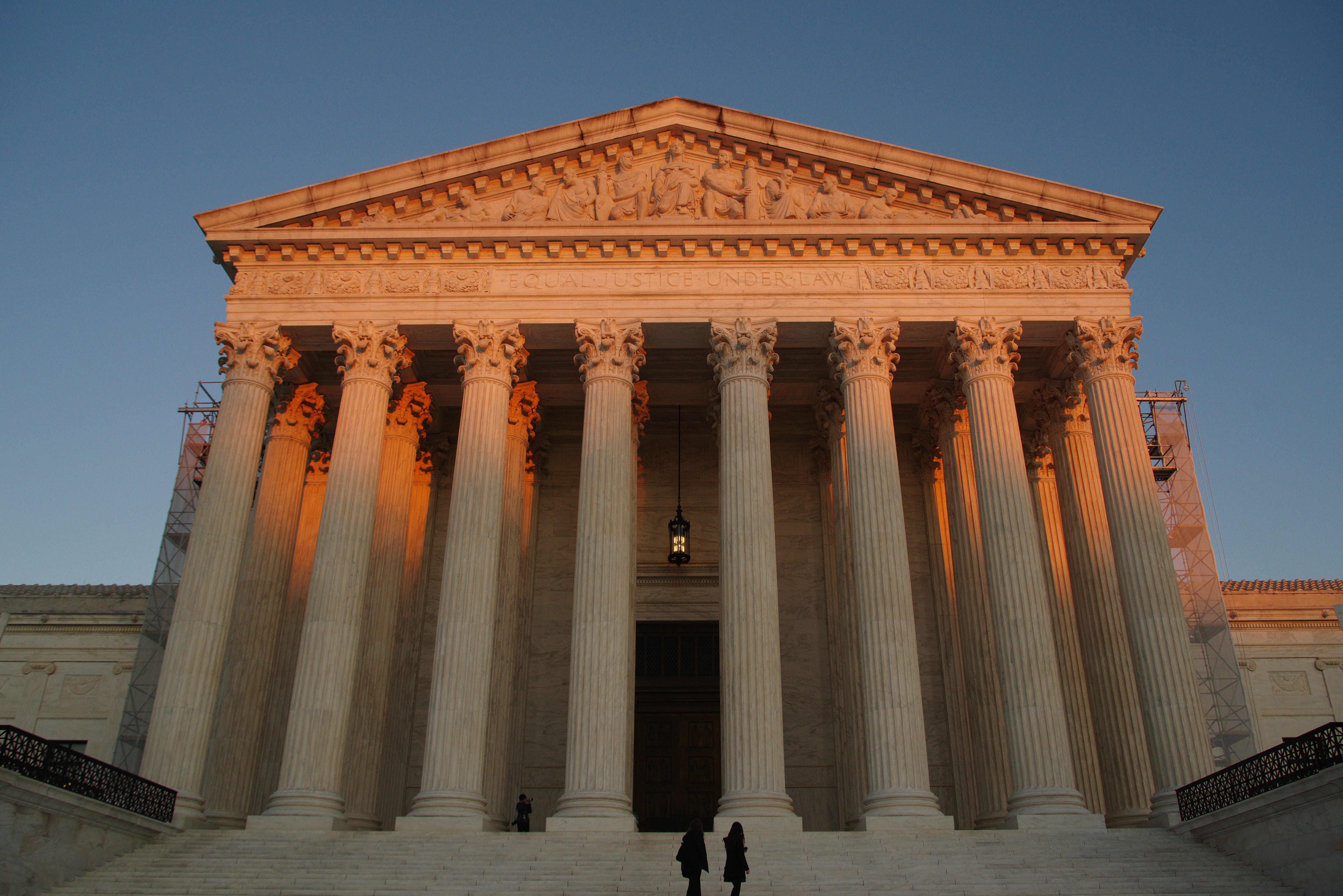
On Monday, the Supreme Court ruled that the president can remove the heads of independent federal agencies at will. That may sound like a disaster for AI oversight. In fact, it’s an opportunity.
The case in question began with the March 2025 firing of FTC Commissioner Rebecca Slaughter, who sued under the agency’s for-cause provision. Lower courts reinstated her under Humphrey’s Executor, a 1935 decision that shielded some regulators from removal by the White House. The Supreme Court overruled Humphrey’s outright: an agency that exercises executive power must answer to the president, it argued, so protections against its leaders’ removal are unconstitutional.
For those of us who have been tracking this issue, this brought a finality to a hope that was, in reality, long ago squashed. The reality is there is no such thing as an independent federal agency. With every governance question, the same pressure occurs: can we design a board’s independence carefully enough to survive the political swings to come? Slaughter answers it: no. And it relieves us of a problem we were never going to solve. The independence we are mourning was always partly an illusion anyway. Tenure protection was real on paper only; a commissioner still faced real perils for defying a president and real rewards for falling in line, and those incentives bent agencies long before anyone was fired.
We should stop trying to insulate the politics. It cannot be done, and Slaughter is the proof. Insulate the facts instead. What we call AI governance is two jobs we have long pretended were one. There is the technical task of measuring what these systems can do and how dangerous they are. And there is the political task of deciding what to do about it. Slaughter is fatal only if we fail to separate these functions. The ruling points toward a design that pulls the technical work as far from politics as it can go and leaves the political decisions where they belong.
We already have the spine of the technical side. The Center for AI Standards and Innovation, CAISI, sits inside the Commerce Department, and its leadership answers to the Commerce Secretary. Its job is scientific: to establish what models can do, how much weight the evidence can bear, and how risk should be measured. CAISI can run and validate evaluations, build benchmarks, set measurement standards, hold secure channels for model access, and publish what it finds. Its work informs the decisions that carry force. It does not make them.

CAISI should not do this alone, and it cannot. Around it should grow a competitive ecosystem of accredited private testers, known as independent verification organizations (IVOs), working to risk thresholds and standards set by Congress or through rulemaking, and reporting up to CAISI. Competition here is not a market slogan but a mechanism that forces the science of measuring AI safety to keep pace with the capabilities it measures. The IVOs that prove best at identifying and scoping risks and at finding mitigations that are both effective and affordable earn the right to keep doing the work, no matter who holds the White House. An IVO that loses its independence loses its accreditation. What accrues over time is a shared technical baseline, a common account of what is true about these systems that is hard to bend toward any one administration’s preferred conclusion. Its durability comes from earned credibility, not from a legal shield the next president or the next Court could strike down.
This also dissolves the objection that private bodies would be exercising government power. They would not. The coercive choices stay with the government. The verification organizations only measure and assess, the way financial auditors and product-safety labs do.
The split does not drain the politics out of AI. Someone must still decide how safe is safe enough, what follows when a system falls short, and which violations draw a fine or force a halt. Those are political choices, and they belong to elected and accountable institutions. Slaughter forecloses the pretense that they can be hidden from politics, and we should stop attempting it. What we can still do is make sure no single political actor sits astride the facts. If the technical baseline is a public resource, many hands can reach for it. Congress can empower states to act. States, the federal government, and the public can each move on the same findings. Build it so that no one office is a chokepoint, and no administration can make an inconvenient truth disappear simply by looking away.

This split can still be designed poorly. Competition can be abused. Standards can be written badly. Accreditation can curdle into a rubber stamp. Each of those is a real risk, but we already know how to work on them.
None of this is theoretical. Connecticut and Virginia have already passed bills establishing independent verification for AI governance. The bipartisan Great American AI Act draft names such organizations explicitly. Anthropic, OpenAI, and Google DeepMind have each, in their own way, converged on independent verification. The argument over whether independent verification is the right home for the science of AI governance is nearly settled. The only argument left is whether we build it before we need it. Slaughter proved the necessity of IVOs. We should not waste the moment.
Andrew Freedman is CEO and co-founder of Fathom, an AI governance nonprofit that finds, builds, and scales policy and technical innovations designed for the AI century.
Perhaps the preferable structure is not assessment on behalf of labs, but insurers. As you note the fundamental problem you're trying to solve is internalizing negative externalities (expected costs of harms imposed on third-parties). But you have a principal-agent problem. And also an information asymmetry.
The Insurance Institute for Highway Safety falls into the broad IVO category, but is funded entirely by the insurance industry and not producer of evaluted product. And like AI, there's a consumer information asymmetry.
There's still colorable criticism lodged against IIHS, but auto insurers directly benefit from accuracy and do not benefit from systematically shading assessments one way or the other.
TBS when IIHS was founded the auto insurance industry was already fairly mature. A meaningful barrier in AI is that cybersecurity and other insurers have not fully adjusted to the new risk gradients and moreover standardization is probably a while off. Then again, could this be a sufficient condition for that happen?
I assume there'd also be some friction in the degree of access to models without lab cooperation. But the point remains insurers have no reason to underestimate risk.
A FT article this week said US cyber coverage went down in 2024 and so did premiums(!). That's not "AI risk" per se but the insurers quoted say it's inarguable AI-enabled risks are growing. So maybe not a great example. And of course terrorism risk insurance required a government reinsurance program (TRIA) to prevent a complete collapse in that market.
The coercive-choices-stay-with-government split is the load-bearing claim, and last month tested it. Commerce pulled two frontier models on a single reported jailbreak. The lab called it "previously known, minor vulnerabilities"; the administration called it a refused safety request; the disagreement was never resolved in public. No IVO consensus would have been waited for there. Auditors also work because independence is backed by law and liability, and this design deliberately trades that legal shield for earned credibility. So what makes an administration honor a measurement it dislikes, when it already overrode the lab's own assessment?