

There are signs that not everything is going smoothly in the AI industry’s attempts to influence the makeup of the next Congress, with campaign donations potentially a mixed blessing amid public backlash to AI. Those tensions were on display this week when one congresswoman endorsed by Leading the Future distanced herself from the pro-industry super-PAC — before issuing a hasty reversal.
It’s another example of how candidates are having to walk a tightrope in an effort to please both voters and industry.
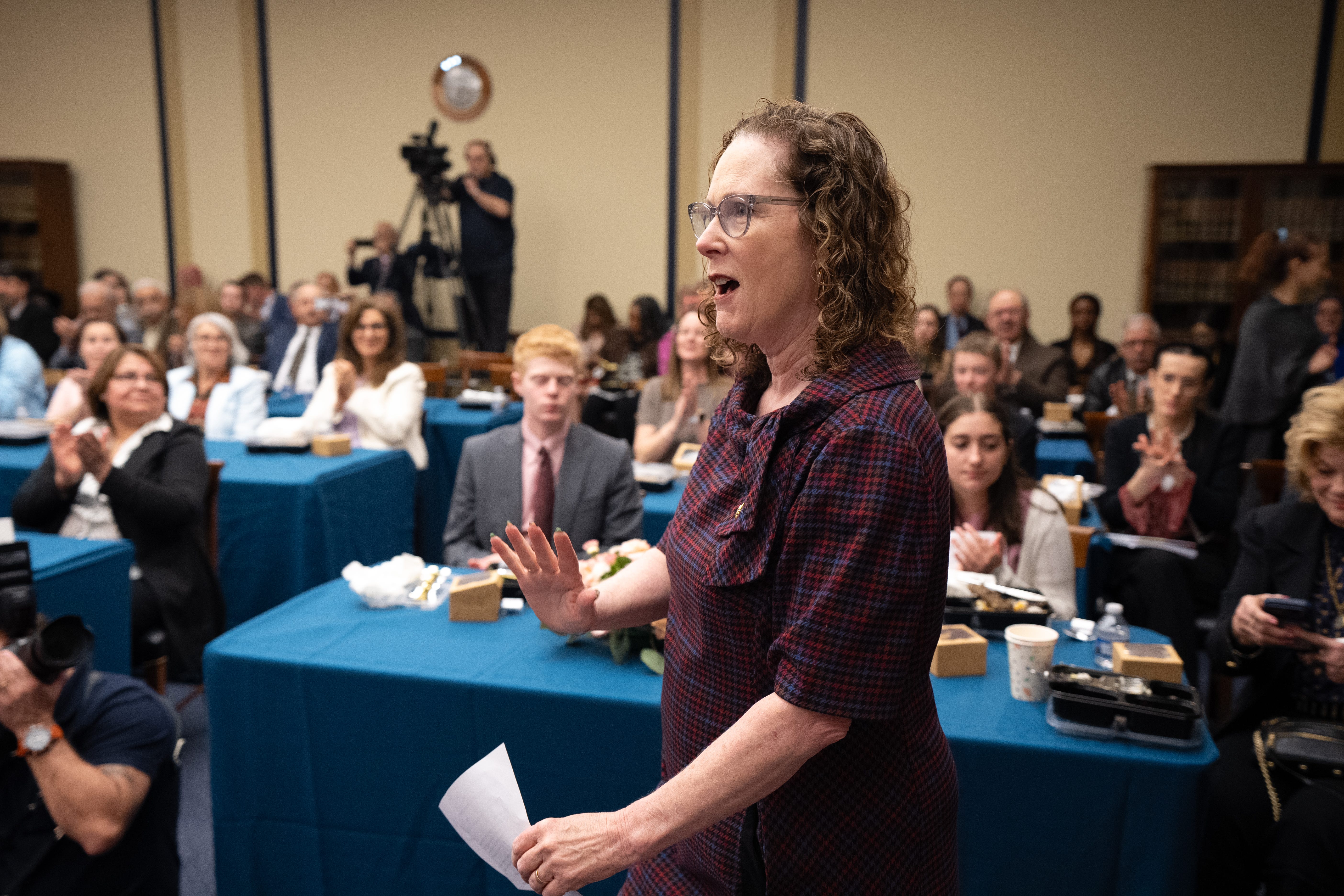
When Transformer first contacted incumbent OR-04 Representative Val Hoyle about Leading the Future’s endorsement, she told us that “AI must be regulated so that it does not harm labor or people” — a statement that would be reasonably interpreted as a criticism of Leading the Future, given concern that its donors prioritize industry development over protecting jobs and tackling AI-driven harms.
“My record on this issue speaks for itself,” she said, adding that “I am all for innovation, but not at the cost of people’s well-being.” Hoyle has historically opposed preemption, calling the White House’s efforts to preempt state AI legislation in the National Defense Authorization Act last year — a move Leading the Future supported — “outrageous,” a “Big Tech backroom deal,” and “government overreach.”
Hoyle’s spokesperson Edward Walrod added that Hoyle “did not seek out the endorsement nor did she find out about it until the endorsement was put out by the PAC itself.” Leading the Future’s endorsement of three Democrats — Hoyle, NY-15 Representative Ritchie Torres and NJ-08 Representative Rob Menendez — was first reported in Axios last week, the same day that one of Leading the Future’s affiliate PACs disclosed $275,555 in spending for Hoyle.
“She does not actively seek out the support of folks that are not her constituents in this race or groups that do not advance the common good,” Walrod added, arguing that Rep. Hoyle “has one of the strongest records in Congress to regulate AI to protect people.”
But shortly after Transformer approached Leading the Future for comment, Hoyle and Walrod appeared to backtrack. “I refuse to ignore industry and deny workers a seat at the table, because when workers don’t have a seat at the table they are on the menu,” Hoyle said in a new statement. “AI is a reality and I want to be one of the key people that ensures we are part of the conversation. Workers and consumers need to be protected and we need to have a broad federal framework based on common sense.” The statement then went through several further revisions, with the most recent statement from Hoyle reading: “Leading the Future endorsed me because they are working to build a broader coalition around AI regulation and I don’t believe we can put our heads in the sand and ignore the industry.”
Hoyle’s latest statement called for “clear federal regulations that protect consumers, ensure that workers are part of the conversation on how to move forward and that we are proactively determining the direction of AI development so that the United States doesn’t get left behind.”

Walrod also told Transformer that Leading the Future’s endorsement followed Hoyle filling out a candidate questionnaire from the dark money group Build American AI, which Leading the Future funds. He added that “we have not received any money from this PAC nor have they spent any money on us to our knowledge or based on public disclosure,” referring to Leading the Future. “There’s no finances to necessarily reject here.” That is despite $292,419 of publicly disclosed spending by Think Big, a super PAC affiliated with and funded by Leading the Future, on ads supporting Hoyle, though it’s possible that the connection between the two organizations had passed Hoyle’s team by.
Leading the Future has been criticized for opposing regulation, though the group maintains that it only opposes state regulation and wants to see some federal safeguards. The group has not endorsed any specific bills but its affiliated 501(c)(4) has voiced support for the White House AI framework.
Leading the Future declined to explain why it is supporting Hoyle specifically. Co-lead Josh Vlasto said: “We are proud to support these leaders and look forward to continuing to build a broad coalition of policymakers at the federal and state level who believe in putting the politics and extremes aside and will work together to pass a strong and smart national regulatory framework for AI that creates jobs for American workers, wins the race against China, and protects the safety of kids, users and communities.”

Hoyle’s team said she has co-sponsored two bills targeting AI-generated election misinformation, including the Securing Elections from AI Deception Act which targets the use of AI to create content that directly interferes with voting.
Hoyle is a progressive Democrat up against two other progressive candidates seeking to represent Eugene and the surrounding area — a safe blue seat where appeals to the working class carry significant weight. Melissa Bird, who is competing for the seat, has criticized Hoyle for accepting corporate PAC money. Bird has also said she will “will do everything I can” to fight data centers. Hoyle is the strong favorite to win the primary.
Hoyle would have been the first to publicly distance herself from a Leading the Future endorsement, though her statements are preceded by increasingly mixed results for AI-backed candidates. In Illinois, Jesse Jackson Jr. lost his race for IL-02 despite a huge $1.43m ad buy from Leading the Future. Support from Meta-funded state PAC Making Our Tomorrow became toxic in Illinois state races, with State House candidate Paul Kendrick telling the Chicago Tribune he did not want the PAC’s support.

Meanwhile, Leading the Future’s opposition of NY-12 candidate Alex Bores — combined with support from AI safety PACs — seems to have boosted his election odds, while fellow NY-12 candidate Jack Schlossberg has been touting the fact that he’s not accepted AI PAC money (despite OpenAI investor Ron Conway, who funds a Leading the Future-affiliated PAC, donating to Schlossberg’s campaign).
Accepting AI PAC money has proven troublesome even for candidates supported by Public First, an AI-safety focused PAC with ties to Anthropic, despite the PAC’s support for stronger federal guardrails and its opposition to Leading the Future. Valerie Foushee, who won her race for North Carolina’s fourth congressional district, was attacked by her opponent after taking money from Public First, for example. California State Senator Scott Wiener, who is running for Nancy Pelosi’s House seat and was the primary author of AI transparency bill SB 53, has also been criticized by his opponent Saikat Chakrabarti for Public First’s support.

The potential toxicity of AI industry money in politics has increased as artificial intelligence becomes a more salient issue in the general election. According to Blue Rose Research, AI has risen amongst voters’ priorities faster than any other issue the political consultancy tracks, such as child care or climate change.
That may help explain why AI money sees more resistance than other special interests. Take, for example, crypto policy, where a PAC with some of the same personnel as Leading the Future poured close to $200m into the 2024 general election, and saw broad success. In that instance, candidates could accept Fairshake money with little pushback, because crypto was less important for voters than kitchen table issues. Though AI still ranks below many other issues, its rising importance to voters calls for a more nuanced political calculation.
Of the two other recent recipients of Leading the Future’s endorsements, representatives for Menendez did not respond to a request for comment, while Torres’ spokesperson Benny Stanislawski did not answer specific questions about the backing.
Dems really need to figure out where they, as a party, stand on this stuff.