

One of Elon Musk’s companies getting embroiled in a bitter legal dispute with a local community is hardly a rare occurrence. SpaceX has had multiple fights with federal agencies and conservation groups over its Texas launch site. X, meanwhile, had several arguments with San Francisco’s municipal authorities about how it used its HQ building — and whether the sign Musk hastily installed after buying the site was safe.
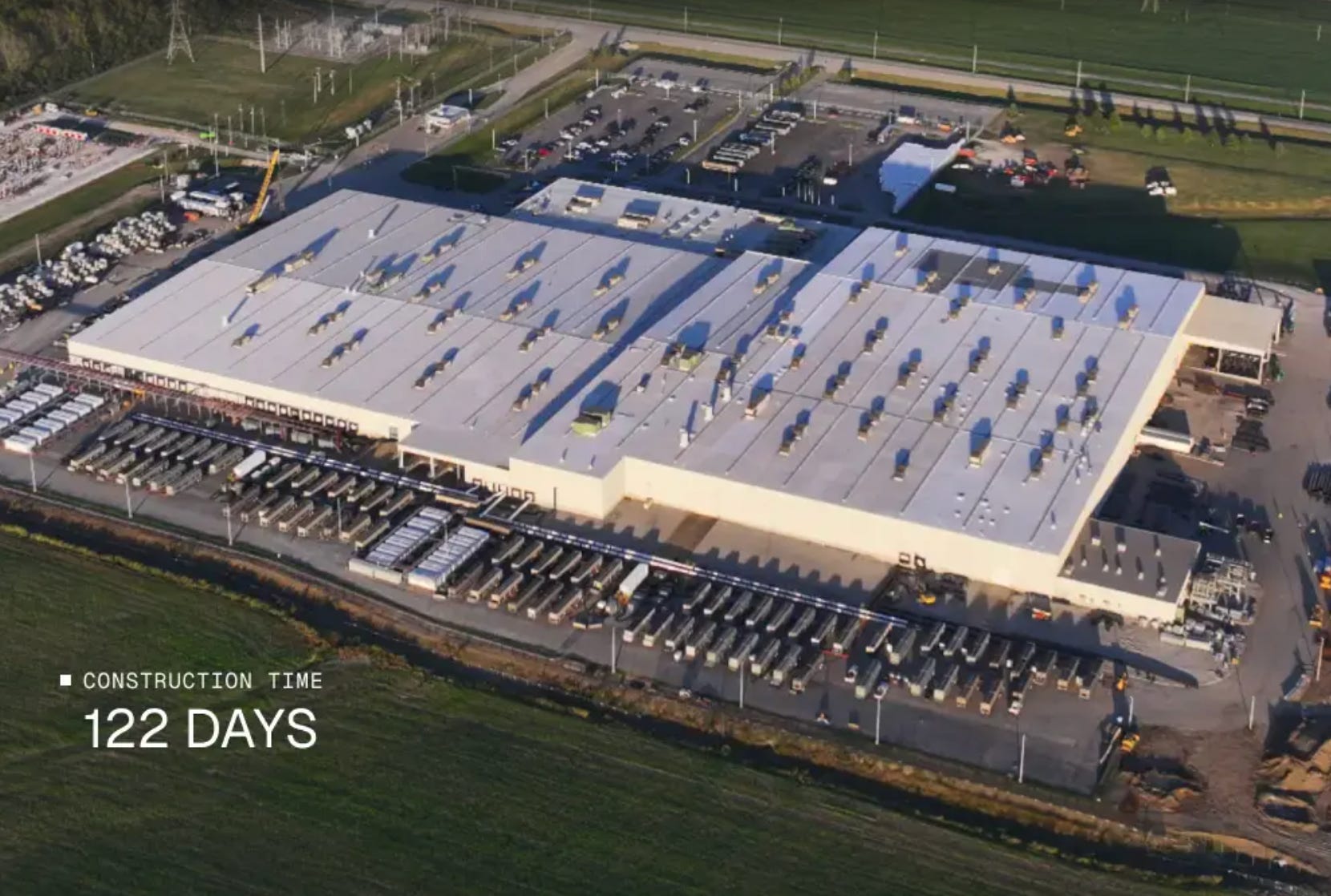
Musk’s disputes in Memphis, Tennessee, though are on a different scale. Memphis is the home to xAI’s Colossus data center clusters — and it has been powering that data center by using as many as 35 portable gas-fired turbines at a time.
These turbines have a combined output of 420 MW, enough to power almost half a million homes, but they produce various nitrogen oxide gases, some of which are known carcinogens, and can exacerbate various breathing issues. The Colossus site is located within two miles of multiple residential neighborhoods.
According to a letter from the Southern Environmental Law Center, the turbines at Colossus could emit between 1,200 and 2,000 tons of nitrogen oxides a year, making it the biggest industrial emitter in Memphis. Not only can this directly affect the health of residents, but nitrogen oxide has various environmental impacts, particularly when it mixes with other pollutants, including localized acid rain and nutrient pollution which can affect soil and waterways.
The setups Musk and others are using present a bigger problem than the large gas plants that supply most grid power: they are less efficient, have fewer pollution controls, and are located in populous areas. Combined, that means more pollution and greater effects on local people.
Residents’ groups argue they have a right to clean air, and that xAI is failing to secure proper permits for its gas generation. The company argues that it is making legitimate use of exemptions for portable generators — and that its power needs vastly outstrip what the local grid is able to supply. Residents recently scored a legal win with the EPA, but it’s unclear whether this will do anything to hamper xAI’s operations.
The location of Colossus, and xAI’s approach to getting its turbines built, has created a particularly toxic environment, both literally and figuratively, not least as many of those most affected are in historically poor and black neighborhoods.
This sort of row might soon be replicated across America, though, as the AI industry looks to step up on-site generation for its huge data center rollout plans — for the simple reason that it seems to be the only way to get it done to their exacting timetables.
As Michael Thomas notes over at Distilled, the AI industry now has nearly 50 GW of planned behind-the-meter — the term for self-generation, rather than relying on the grid — data centers, around a third of all announced projects. The reason is simply that the US grid, which has not had to deal with rising energy demand for decades, is not capable of connecting up so many new, major, energy users in time. On-site generation could, per Thomas, cut the time to getting a data center online from seven years down to two.
This turnaround has happened fast. Until summer 2024, no major AI data centers were using on-site generation. It was instead a relatively left-field idea generally only adopted by crypto-mining operations, working on a very small scale.
Most data centers on the commercial internet need to be located near where users live, to make sure that lag times are short. Crypto mining outfits could be located anywhere, though — and so some operations set up where they could be powered by cheap energy they could access directly, bypassing the grid, whether that was near a hydroelectric dam, or an oil drilling operation.
“The Bitcoin miners realized they don’t have to worry about location,” Shane Greenstein, Martin Marshall Professor of Business Administration at Harvard Business School, explains. “So they could put themselves in West Texas. They could put themselves in North Dakota. And the point was, West Texas has this abundance of natural gas. It’s a byproduct of oil drilling.”
These relatively small crypto operations were driven by cost, going where there was cheap (often virtually free) gas available, because there were no pipelines. AI data center operations, Greenstein explains, are obviously not trying to set up small and low-cost data centers, but they do share a crucial characteristic with crypto miners — research data centers don’t need to be located near consumers.
So an operation looking to set up a data center quickly could find somewhere with cheap land, permissive regulations, and the ability to ship in enough gas to fire major turbines. And if it’s not located near to built-up areas, the gases produced by the power generation should not be a major concern.
That may mean the kind of health and environmental impacts likely to be seen in Memphis, and the political blowback, can be significantly mitigated for gas-powered data centers that aren’t built right next to populated areas. Recent polling for Politico found that the public was broadly split about the idea of a data center being built in their neighborhood, but when they are built they have repeatedly become flashpoints motivating opposition.
Of course, that doesn’t necessarily make off-grid gas turbines the most sensible choice even in more remote areas.
“It is a problem for the planet. They burn off methane, and they’re not very clean. They’re not good for the planet” says Greenstein. “Had you asked me three years ago, when this boom first started, I would have said they’re going to all end up in the Pacific Northwest, because the hydroelectric was abundant there.”

It could also become a problem for the viability of the data centers themselves. “It has the drawback that they’re not on multiple parts of the grid,” says Greenstein. “They’re all dependent on one source.” That could come back to bite AI companies if gas prices spike.
It’s a stark contrast with China, where historic investment in renewables has created areas with a surplus of energy on the grid. To build new wind or solar in China now you have to show that you have either a waiting customer or a grid hookup arranged and scheduled, in some cases effectively creating additional economic demand for data centers.
In the US, however, neither the security of the energy source nor health and environmental concerns seem set to put off AI companies, and certainly not Musk. Last month, he confirmed that xAI had placed orders for a total of seven much larger gas turbines, each capable of producing 380 MW of power, versus a combined output of 420 MW for all the 35 turbines used by Colossus. Together, this is enough power to supply a city roughly the size of Philadelphia.
These kinds of turbines are generally only purchased by extremely heavy industry, or power plants, who are now facing an unprecedented surge in demand from a completely new type of customer.
Greenstein declared himself impressed that Musk had managed to secure the orders he did, not least because turbine manufacturers have been reluctant to scale production to meet the apparent demand.
“Good for him. They’re in rare supply,” he says. “The rumors are that they’re approximately five years behind on demand, and the standing interpretation of that is a somewhat ironic one, which is that the suppliers of the heavy equipment don’t believe the five years of demand is going to be realized.”
Turbine manufacturers, in other words, are skeptical of AI investment claims, and don’t wish to risk their own financial future — with extremely expensive capital spending — boosting supply capacity for a demand line that may collapse in an AI crash.
The result is a fight between traditional customers and AI giants for priority. How might Musk have secured an accelerated timeline for his turbines? “I have no specific information, but I would guess he paid,” Greenstein concludes, saying he can think of no other way to have done it.
David Fishman, an analyst covering the energy sector, thought it was notable Musk had secured his turbines, which are due for delivery within two years, from a lesser-known South Korean company, rather than one of the larger manufacturers.
“Elon and xAI did very well to secure turbine delivery as early as 2026/27,” he says. “The traditional producers — GE, Siemens, Mitsubishi — I think have their order books filled up out to 2030. Perhaps going to a smaller player outside of the traditional big-three turbine OEMs was the only way to secure delivery on that timeframe. I believe this is Doosan’s first-ever export of a domestically-developed heavy-duty gas turbine.”
Fishman credited Musk with taking a concept from the crypto-miners and scaling it up exponentially — an idea the AI industry seems to have adopted more widely, if for no other reason than a lack of other options to meet its power generation needs.
“You could say the crypto people pioneered the idea of putting their compute power close to the gas source, using stranded gas, bypassing the grid, and scaling modular on-site power quickly,” he says.
“But xAI is showing a leap to 1,900 MW of heavy-duty turbine power plants for AI, inspired less by opportunism (taking advantage of stranded gas) and more by the mismatch between the huge growth in AI data center demand and the massive grid and supply chain bottlenecks that are stopping them from scaling at the pace they’d ideally like to.”
It is likely to prove as unpopular with grid providers, trying to buy turbines themselves, as it already is with those living near to data centers. But the AI dash for gas is real — and seems to be essential if any of them are going to meet their timetables to roll out more compute.
The longer term question, however, is whether any of this makes sense by any metric other than the industry’s mad rush to build capacity at breakneck speed. Powering hastily constructed data centers with standalone gas turbines is a short term solution to a demand crunch, but risks storing up problems — both environmental and political.

I’m still not clear on how bad the environmental impacts actually are. How many extra people will get cancer, or have asthma attacks or suffer other negative health effects from this?