

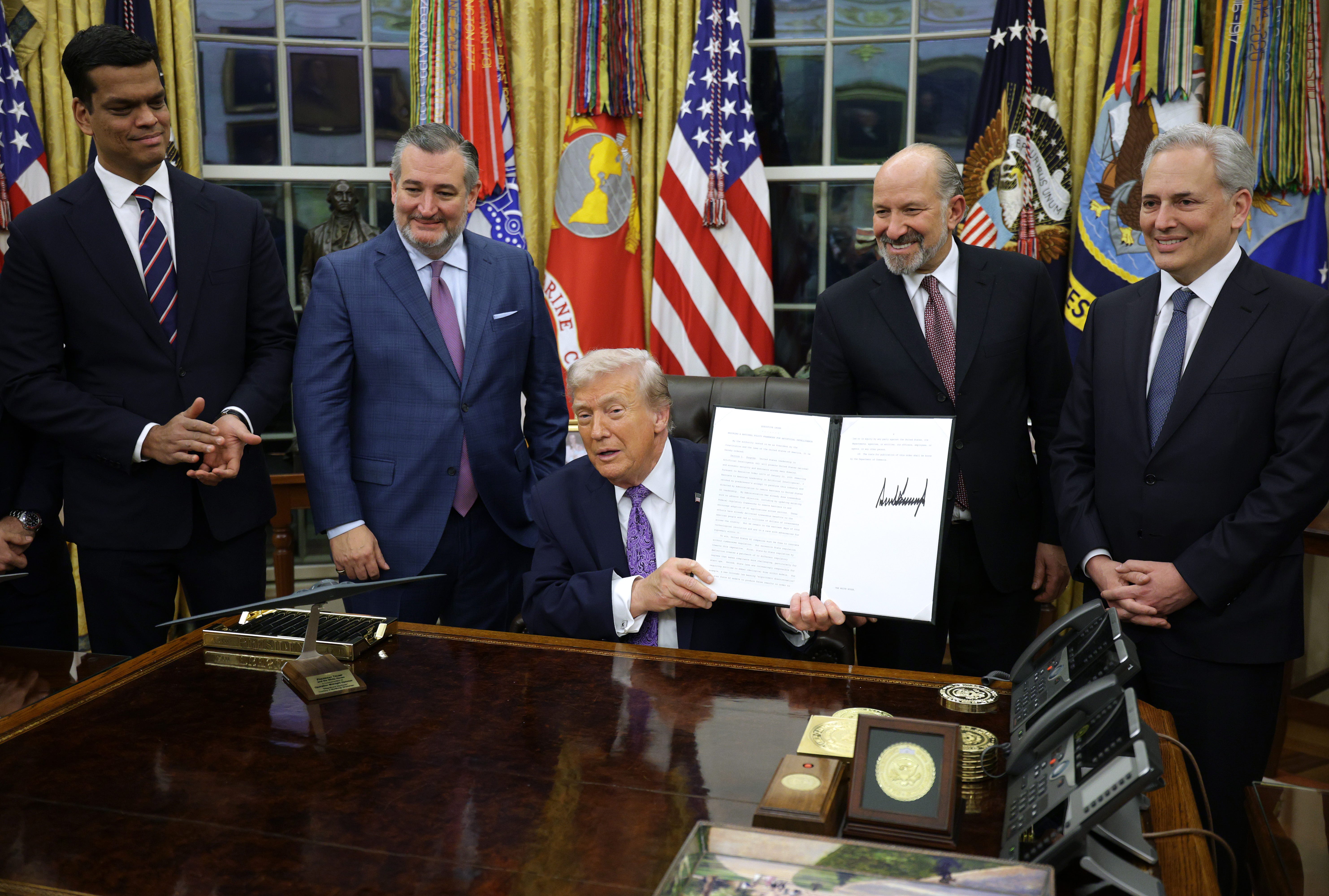
The White House released a framework for federal AI legislation on Friday morning that appears designed to drive a partisan wedge between the loose coalition increasingly concerned about the impact of AI.
The framework pushes for preemption of state laws while focusing on issues such as child safety and data centers that matter most to Republican voters. Topics such as algorithmic bias which have animated Democrats, or the kinds of concerns around biorisk or loss of control that have traditionally motivated AI safety organizations, don’t get a look in. Neither do some issues that have been raised by both sides of the aisle, such as large scale threats to jobs.
The Trump administration is under pressure to pass AI legislation before the midterms when the Democrats are expected to reclaim at least one chamber of Congress. This may explain why the framework was released just two days after Senator Marsha Blackburn, a senior Republican Senator with an eye for AI safety who has complicated intra-party dynamics, released her own draft legislation. The framework seems intended to streamline Republican messaging on AI regulation, and counter Blackburn’s bill.
The four-page document addresses the following topics, in order:
Child Safety. The framework implores Congress to create “commercially reasonable, privacy protective, age-assurance requirements” and “require AI platforms and services …to implement features that reduce the risks of sexual exploitation and self-harm to minors.” These principles are more light touch than some state laws, but go further than other parts of the White House’s proposals in placing some liability on AI companies. However, it also says such laws should avoid standards which could “give rise to excessive litigation,” which suggests child protection responsibilities for AI firms would be narrowly defined.
Energy. The framework asks Congress to codify the promises the White House received from data center companies earlier this month to pay for energy production that offsets their own consumption, or something similar. Rising energy prices in districts hosting data centers has led to strong resistance to new data center projects, particularly in Republican states. This section also expresses support for permitting reform, typically described as weakening environmental laws which are used by activist groups to slow development or mount legal challenges.

Intellectual Property. Training of frontier models on intellectual property, as well as content created with the use of AI-generated talent, has given rise to lots of litigation and push back from Hollywood and other creators. The White House is attempting to quell this by pushing for federal legislation which protects against “unauthorized distribution” of AI-generated content which mimics a person’s “voice, likeness, or other identifiable attributes,” and requesting that Congress enable “licensing frameworks or collective rights systems for rights holders to collectively negotiate compensation from AI providers.”
However, this section has multiple caveats that protect AI companies, including the suggestion that such negotiations should not incur “antitrust liability,” should “not address when or whether such licensing is required.” It also leads with the clarification that the “Administration believes that training of AI models on copyrighted material does not violate copyright laws…and therefore supports allowing the Courts to resolve this issue.”
Free Speech and Education. The framework also includes short sections on key conservative AI talking points. It says that federal legislation, for example, should avoid any censorship of “expression” or content moderation based on “partisan or ideological agendas.” It also includes requests to increase information sharing between the government and industry and upskill government offices so that they are better equipped to use AI.
Strong Industry Carve Outs and Federal Preemption. The end of the document includes major protections for industry to curb the creation of any federal legislation that could slow AI development. For example, it says that Congress should neither allow for stronger state AI regulations nor create any new agency or rulemaking body for federal AI regulation. Instead it argues that it should rely on “existing regulatory bodies with subject matter expertise and through industry-led standards.”
“Preemption must ensure that State laws do not govern areas better suited to the Federal Government or act contrary to the United States’ national strategy to achieve global AI dominance,” the framework goes on. This would effectively codify the White House’s executive order from December released after Blackburn led opposition that halted its previous attempt at preemption.

Several other topics that have been pushed by AI safety advocates are absent. There is no mention of a national policy on curbing frontier model risk, for example, such as mandated reporting or user disclosures as included in bills such as SB53 in California or the RAISE Act in New York, and which are also a component of Blackburn’s bill. There is also no mention of a federal law regulating chip exports, which has been an even more divisive issue within the Republican party, several members of which in Congress have outspokenly disagreed with the White House’s decision to permit the sale of advanced chips to China.
There is also no mention of safety concerns advocated by Democrats, such as algorithmic discrimination on the basis of anything other than viewpoint and speech, or some concerns shared by both sides, such as widespread workforce automation.
Another key issue omitted from the framework is Section 230, a provision which protects tech companies from liability for what users post on their platforms. The provision has been protected fiercely by tech companies over the past three decades, in court and through lobbying efforts and Congressional testimony, but has been criticized by both parties as simply empowering Big Tech. The last portion of the framework, which details federal preemption and other carve outs, shields AI companies from liability for negative effects among their users in similar ways.

In Blackburn’s bill Section 230 would be sunsetted. Brad Carson, who leads the advocacy group Americans for Responsible Innovation and the Public First Action network of AI safety-focused super PACs, called the White House framework “230 on testosterone.” Blackburn also included proposals for dealing with AGI, and reporting requirements for frontier model development.
Blackburn said she looks “forward to working with my colleagues to codify the President’s agenda” after the White House release Friday morning.
Prior to both the framework and Blackburn’s draft, AI policy watchers were already expecting an AI plan from Senator Ted Cruz, who four sources say will now lead the legislative push for a bill in line with the White House’s recommendation. Just last week Cruz said that he planned to release a plan for AI legislation by the end of April.
Republican House leadership released a statement shortly after the White House framework was published giving it their full support, indicating a corresponding bill would be prioritized by leadership.
Your usual Transformer Weekly with all the AI policy news that matters will be back next Friday.
It's notable that Bernie Sanders has been on a hot streak of AI Safety advocacy recently. While I'm not sure a data center moratorium is the right way to go, he's also taken seriously the idea of a coordinated pause on capabilities development motivated exactly by concerns of both labor displacement and existential risk from AGI that this framework doesn't take seriously. It is beginning to seem like AI Safety outside of issues like child safety is already polarized, and progressive politics may prove to be natural ally.
https://onethousandmeans.substack.com/p/sanders-sounds-the-alarm-on-ai?utm_source=share&utm_medium=android&r=5yex5f
'commercially reasonable' child protections. We live in the time of monsters.